
Tamaishiki Recommends "Six Musts"
Flourish in a future
where we must coexist with AI.


Things to consider until children reach the age of 12 years old.
The five "Musts" from Tamaishiki.
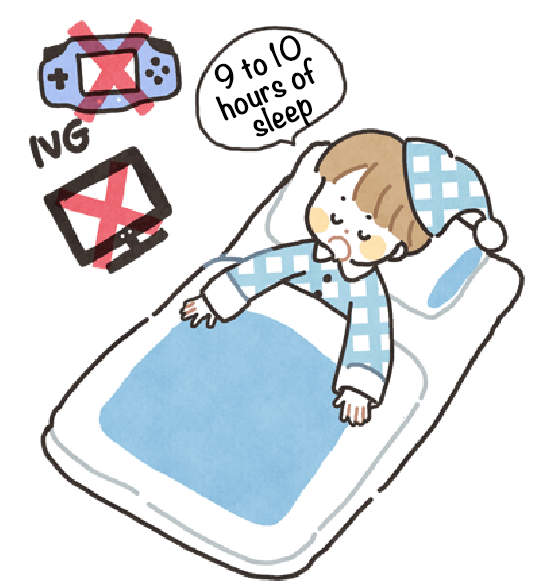

Sleep deprivation is the ultimate enemy of children's growth!
Make sure children get plenty of sleep in order to maximize the effects of learning
No matter how great the teachers and materials may be, everything ends in failure if they don't sleep enough. They need enough sleep to healthily grow into an adult. Let them go to bed as early as 9 PM and sleep for 9~10 hours. Keep in mind that watching TV and playing video games lower the quality of sleep.
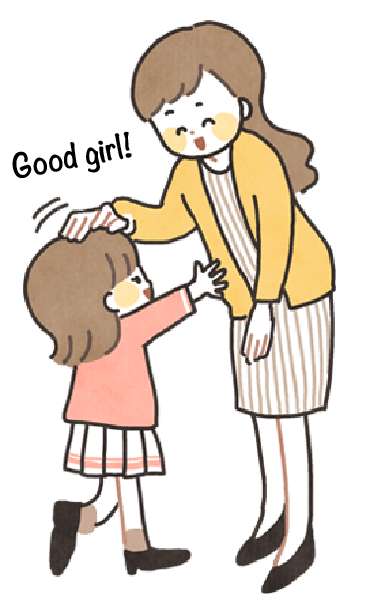

What can be done to let children enjoy making efforts!
Look at the process, not the result, and it will lead to a sense of self-efficacy in your child.
It is important to foster the self-efficacy of children by telling them "you can do it!" from when they are little. Please recognize and praise their efforts even if the result is not the best. Contradicting with the spontaneity of your child like "this is wrong" and "you shouldn't do this" is a big no-no. Whatever the result is, first, recognize that they have tried.
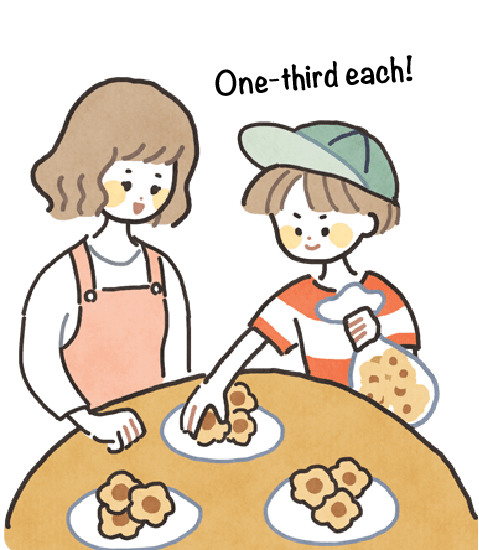

Communication is absolutely essential!
Cultivating “Creative minds” will help students correctly understand the meaning of words.
Visualization, the ability to convert verbal information into visual images, can be developed not only with Tamaishiki teaching materials but also with things that happen in everyday life. For example, in the case of division, it is necessary to be able to “see” the division in your head. Asking your child to take on the role of dividing snacks on a routine basis will help them get a better sense of some mathematical concepts such as the composition of numbers, fractions, and ratios (proportions).
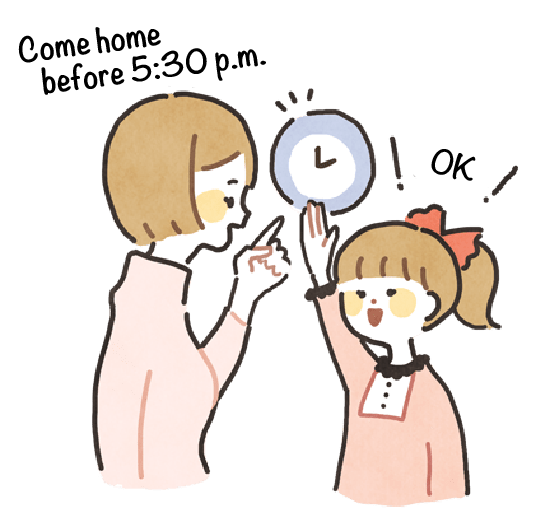

It's also related to time management skills!
Improve your child's spatial perception in order to imagine what you cannot see.
Spatial perception is important for understanding "time" and "spaces", but those are hard to imagine as they are intangible. Therefore, verbally specifying the time to students by saying things like "~minutes later, for ~ minutes", "30 minutes" "please let me know when it is at around 4:10", will have a positive effect on children's development. It is also important to let children solve the problems of not only plane figures, but also solid figures.

Making good habits from childhood is essential!
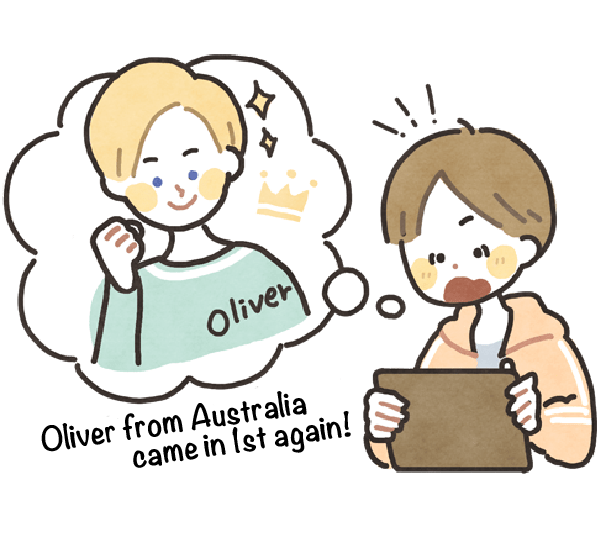
For kids to become "global kids," it's important for them to realize that there are kids who are doing their best all around the world.
In this age of globalization, children need to become aware of the world around them at a young age. Whenever there are news and stories about other countries, parents should talk about it with their kids.
(e.g. Sushi → Japan → What kind of country is Japan?)

To cultivate an "inner compass" as a solid foundation for life!
Consciously discuss the "Five Core Values" at home to nurture your child's autonomy
A parent's words and attitudes experienced during early childhood are deeply engraved in a child's heart, shaping their future values. That is why, before they reach the age of 12, we should create daily opportunities at home to talk about five essential themes: "the purpose of studying" (to discover one's unique strengths), "the true essence of money" (the joy of earning rewards filled with gratitude), "a person's true worth beyond physical appearances," "the pure joy of reading books," and "a broad perspective to look at the wider world." Let's build these meaningful conversations into our daily family life to help them shape their own path.
here's what we'd like to share with parents.


Tamaishiki provides educational materials that develop children's abilities in order to prepare them for a future where they
can play a role on the global stage and coexist with AI.
What is the purpose of learning the ability to think,
judge, and express one's self?
What is the purpose of learning the ability to "think," "judge," and "express" as outlined in the new academic theory?
Judgements are made through things like debates, presentations, short-answer questions, essays, and communicating in English. All of these things require you to convey your thoughts to others (using words, sentences, and the English language). If you keep saying things like "this is wrong", your instructions may be viewed as nitpicky. Don't forget the overall goal and discourage your child! Compliment them on what they have written, what they have said, and what they have presented; no matter how messy their writing is, or how poorly constructed their sentences are.
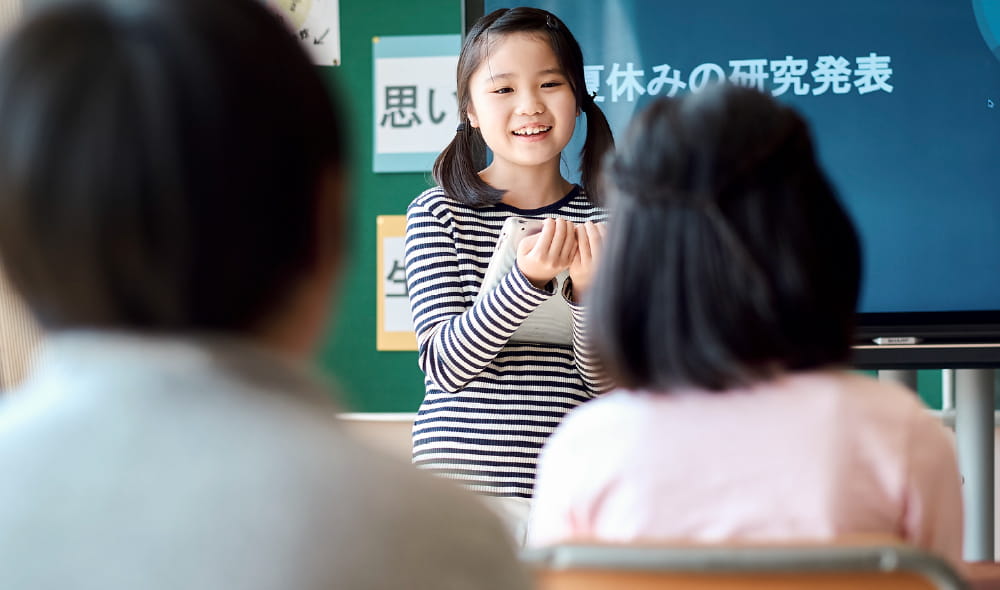
Today's school education is in a state where things like language, knowledge, theory, and culture are input with vague goals and objectives. In order to effectively think and express oneself, one must connect the things that have been learned with imagination. Tamaishiki has always emphasized the importance of "imaging skills.” Let the children imagine, think, create, and act. We would like to let them learn this in their early grades before they become busy with exams and other factors.
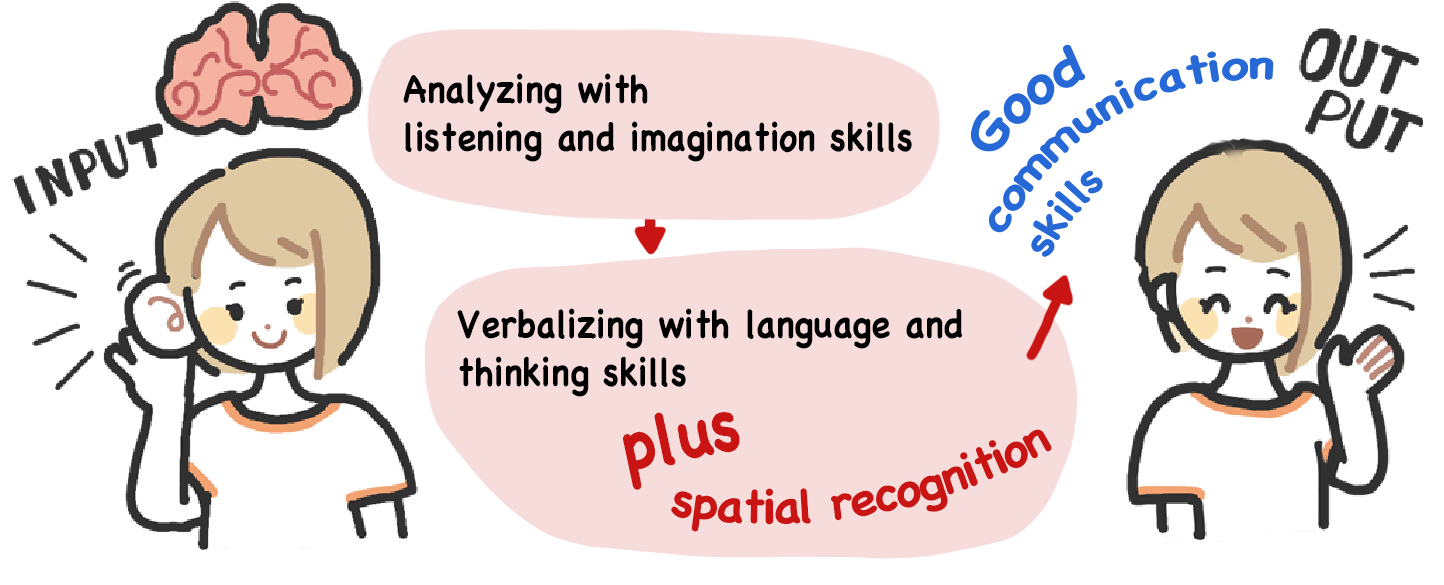
“Imaging skills” develop thinking, judgment, and expression abilities!
The power to acquire the skills that will be necessary in the future

The "4Cs and 1I"
are the first letters of the words that represent the skills that will be essential to acquire in the future.
-

Creativity that produces new sets of values. Since the beginning of development, we have established an educational policy of "developing the ability to create independently," and we believe that this should be consciously nurtured. We are working on this as one of our key missions. For example, we have introduced a method of imaging mathematical problems through stories, and we also emphasize intellectual learning which fosters the creativity that children naturally possess.
-

Critical thinking is one of the essential driving forces that create the energy for major change. While the literal meaning is "critical," it does not mean that you must be critical of others. It is important to develop the mentality of listening to and from others, even if your opinion differs from theirs. The course is designed to help students develop the ability to draw conclusions, based on the differences between their own thinking and the thinking of others, through the use of reading comprehension and science writing exercises.
-

The ability to persuasively express one's values and thoughts to others is becoming increasingly important in our global society. Our goal is to maximize the children's motivation to learn from each other by actively incorporating "expression" classes that nurture a "rich humanity" with the skills of children to express their own opinions, understand the opinions of others, and value their relationships with others.
-

The Ministry of Education in Japan lists "cooperation" as one of the skills that children should acquire. As people interact with each other across borders on a daily basis, it is essential to have the skills to collaborate with people who value diversity and respect the values and ideas of others. We are actively incorporating "expression" classes to help students learn to express their opinions to others and to learn how to think things through.

In the near future, it is predicted that AI (Artificial Intelligence) will replace many of the jobs and professions that humans are currently responsible for. The foundation for success in a society that will coexist with AI is the ability to imagine the unseen, or "imagery skills." The power of the human imagination is when we can read the situation in our mind, imagine the way other people feel, and then decide which words to use to convey our message.
The various learning materials of Tamaishiki develop the ability to construct images in one's mind that will help children flourish in the future.